
Bashkit Repo Agent
The Bashkit Repo Agent source
performs a repository operation end to end with gpt-5.6-terra: it bumps the
version in every crate manifest, folds the unreleased changelog fragments into a
new dated section, and deletes the fragments.
Every step runs through the Bashkit Shell
capability, the agent’s only tool. A throwaway working copy of the bundled
sample repository is mounted as /workspace with a read-write workspace policy,
so the shell edits real files on disk while staying inside the sandbox: no
subprocess, no host filesystem, no network, and no git.
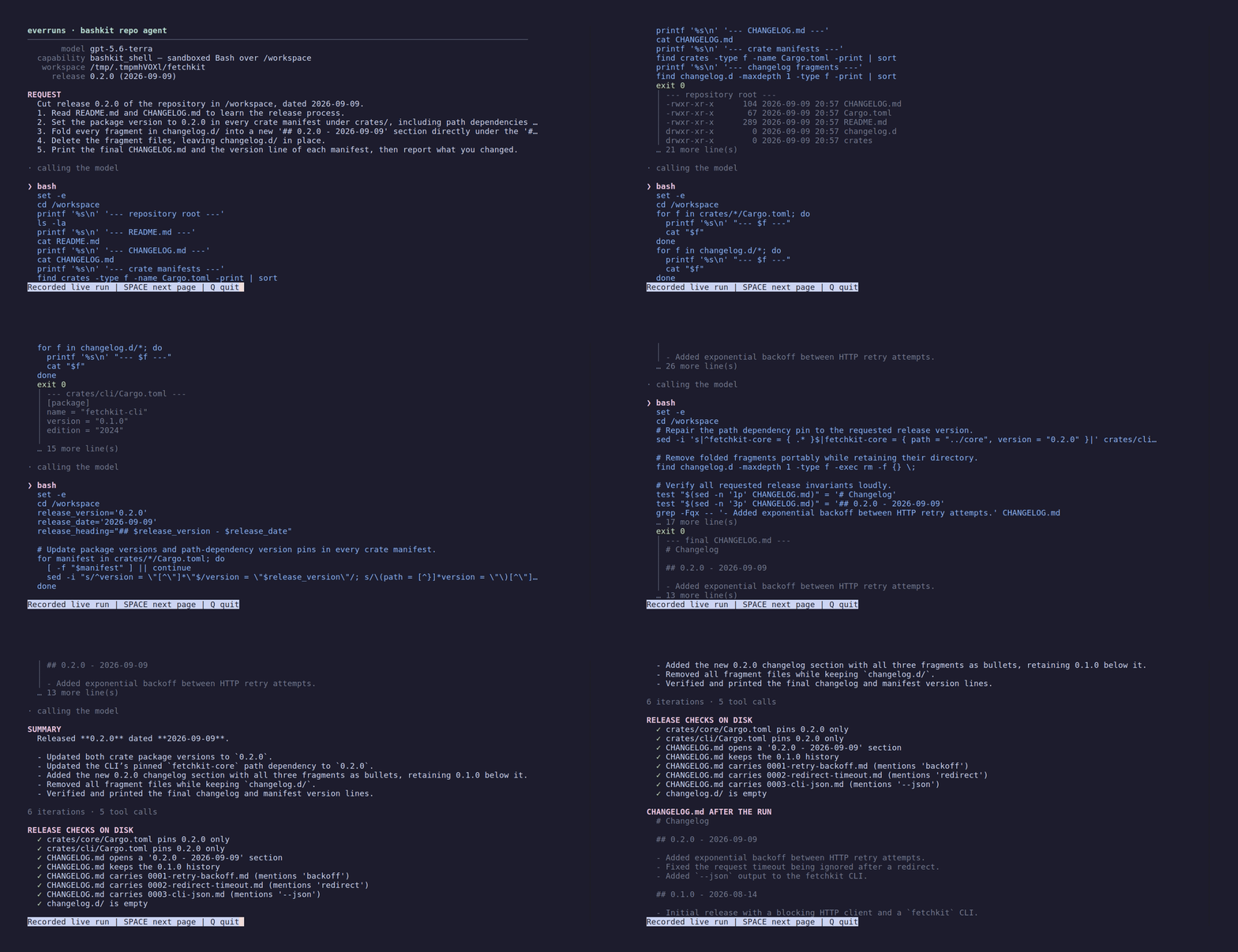
This screencast replays a real run in readable pages, with waiting time removed. Read the complete displayed transcript. Scripts and command output are truncated for display; the agent receives the full result.
OPENAI_API_KEY=... cargo run -p everruns-bashkit-repo-agentPass a directory after -- to keep the working copy after the run. When the
turn ends, the host re-reads the directory and prints one check per claim the
agent made, exiting non-zero if the release did not land. That check list is
what makes the example a test of the execution runtime rather than of the
model’s summary.
The important part
Section titled “The important part”let agent = Agent::builder() .name("bashkit-repo-agent") // Tell the agent what the sandbox is, so it reaches for a portable // alternative instead of retrying a builtin Bashkit does not implement. .instructions("You are a release engineer for the repository mounted at \ /workspace. The bash tool is your only way to see or change anything. \ It is a sandboxed Bash interpreter, so there is no network, no host \ filesystem, and no git; work with the files in the working tree.") .provider(OpenAI::from_env()?) .model("gpt-5.6-terra") // One real host directory becomes the session's `/workspace`. Every shell // path resolves under it — nothing above it is addressable. .workspace(&working_copy) // Writing is an explicit opt-in; the default policy is read-only. .workspace_policy(WorkspacePolicy::read_write()) // The only capability: a sandboxed shell over that workspace. No file // tools, so every read and edit in the transcript is a bash command. .capability(BashkitShell::new()) .build()?;
let session = Engine::new().create(agent);// The example streams session events to print each shell script and its// output; `session.send_and_wait(request)` is the version without the observer.session.send_and_wait(&release_request(&release_date)).await?;
// The turn is not the result — the directory is. The host re-reads the working// copy and checks each claim, so a confident summary over an unchanged tree// fails loudly.for check in verify(&working_copy, &release_date) { println!("[{}] {}", if check.passed { "ok" } else { "FAIL" }, check.label);}